
EmotionTrac
|
2025

Company
EmotionTrac
My Role
Lead Product Designer
Timeline
January 2023 - Present
Responsibilities
UX/UI Design & Iteration (v1–v3)
Prototyping (Figma)
User Research & Feedback Synthesis
Interaction & Information Architecture
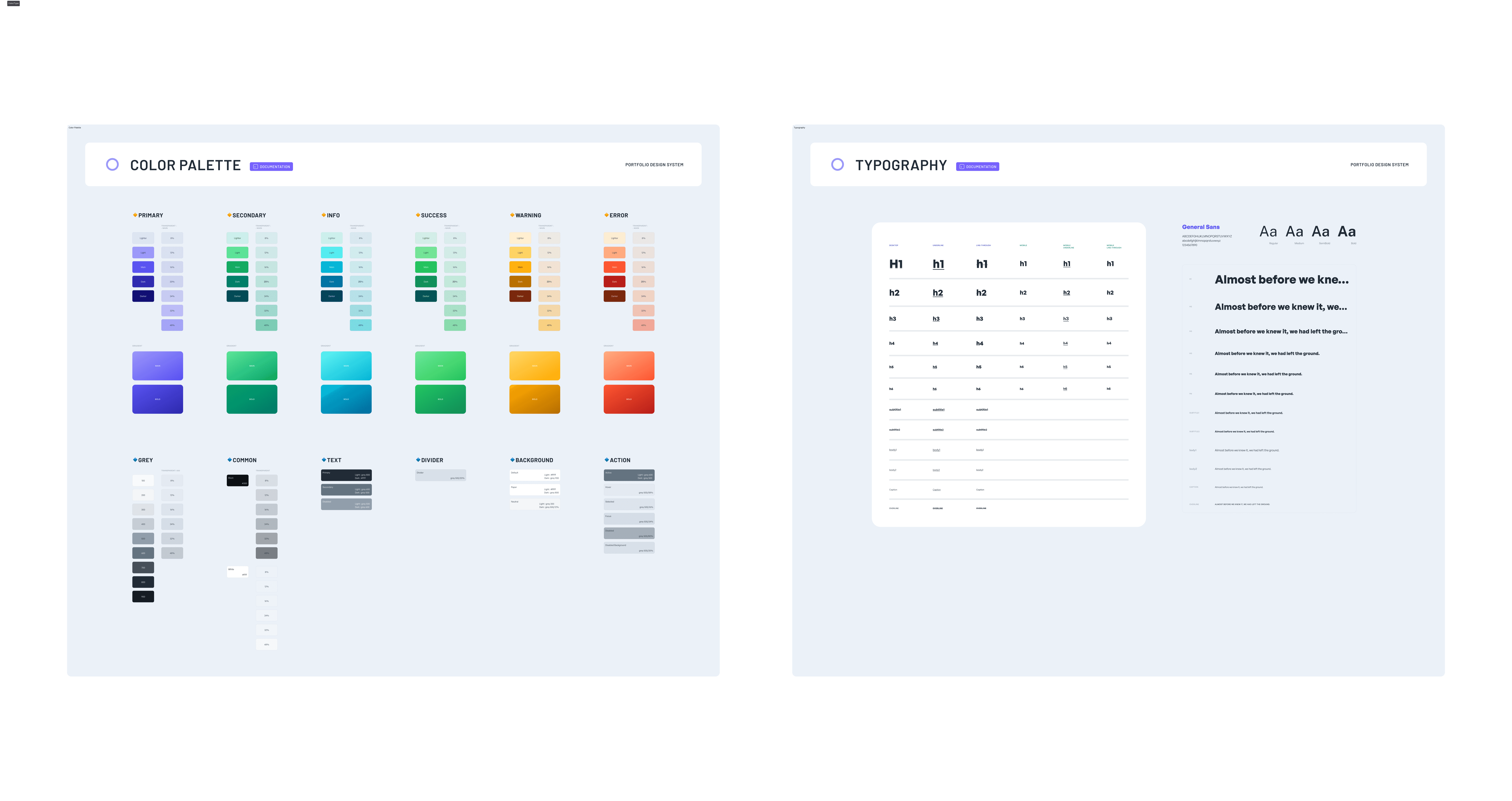
Design System Expansion
Collaboration with Legal & AI Engineering Teams
Overview
EmotionTrac is an AI-powered platform used by law firms to analyze how audiences emotionally respond to trial videos, depositions, and narratives. While the underlying data was powerful, the original dashboard overwhelmed users with dense charts and lacked a clear narrative, making it difficult for lawyers to extract actionable insights.
I led the redesign of the core dashboard to transform raw emotional data into a clear, guided, insight-driven experience.
The Problem
Emotional data was presented without hierarchy or context
Users had to interpret complex graphs on their own
Key insights were buried under technical metrics
The dashboard lacked a clear flow from “what happened” to “what it means”
Lawyers struggled to quickly understand or trust the outputs
This resulted in slower decision-making and underuse of advanced features.

An Iterative, Feedback-Driven Approach
EmotionTrac has been through three major design cycles, each shaped by structured feedback from active users. Early iterations revealed fundamental issues: fragmented navigation, inconsistent data visualizations, and overwhelming volumes of metrics that made the tool difficult to use in real-world scenarios. By embedding regular usability testing and interviews into the design process, I was able to capture recurring patterns and pain points that informed every redesign decision.
Transforming Complexity Into Clarity
The heart of each iteration was a drive to simplify without sacrificing depth. Users consistently expressed the need for clarity, narrative context, and a way to connect raw numbers to meaningful outcomes. With each round of design, I reduced unnecessary complexity, streamlined the flow of information, and layered in contextual cues that made data more interpretable. This allowed the platform to evolve beyond being a repository of raw emotion metrics into a clear, insight-driven experience that professionals could confidently rely on across industries.
Redefining the Dashboard Experience
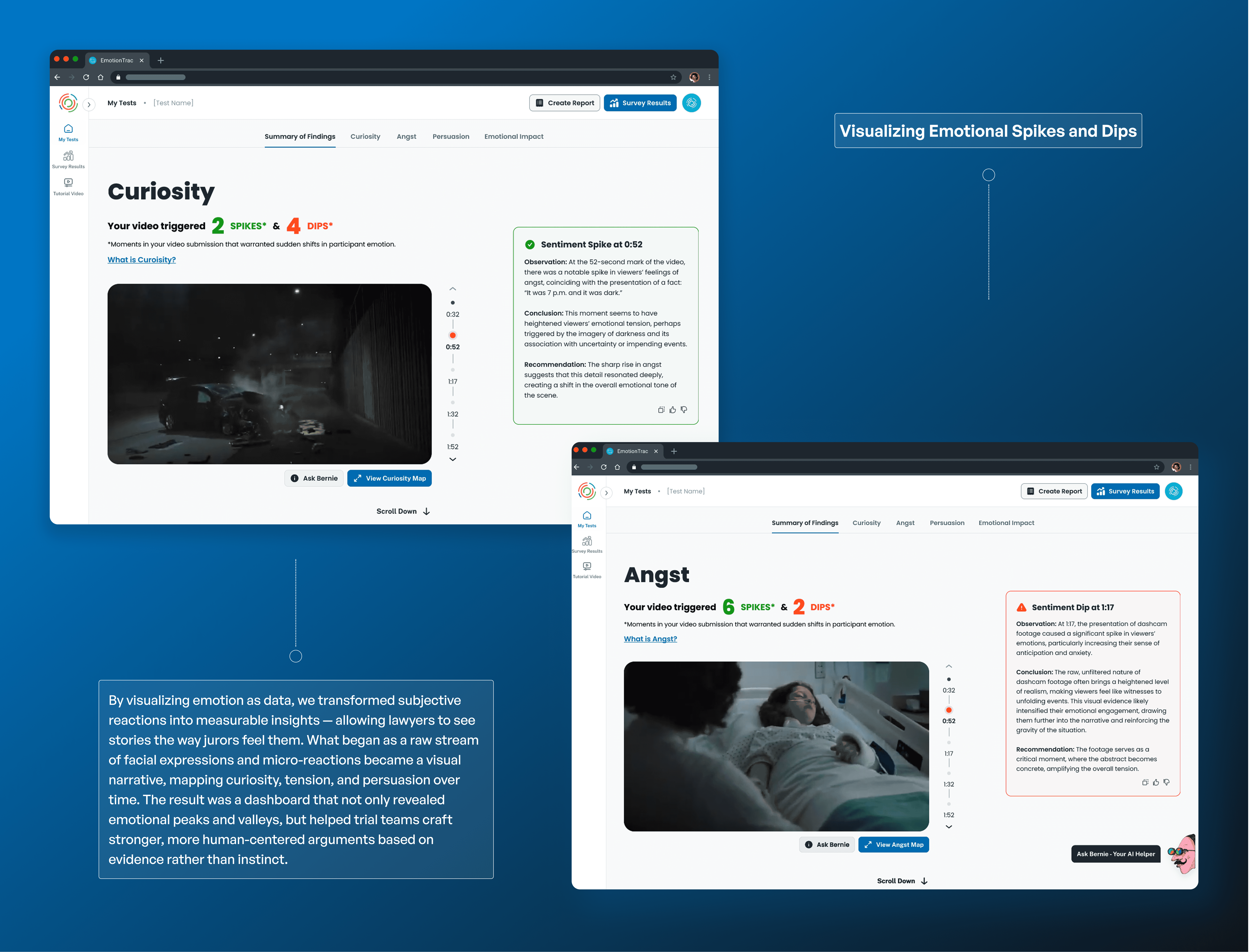
The dashboard is the foundation of EmotionTrac, and its evolution became one of the most critical design challenges. Early dashboards were crowded with competing graphs, making it difficult for users to focus on what truly mattered. In the redesigned version, I consolidated data into a streamlined Credibility Dashboard that surfaces only the most important emotional peaks and trends. Instead of overwhelming users with every data point, the dashboard provides an at-a-glance overview of emotional response patterns, supported by contextual cues that explain the significance of each moment. This shift made the platform approachable for both seasoned professionals and first-time users.

Designing for Storytelling and Context
Emotions are most powerful when tied to moments of experience. To bridge that gap, I designed Storytelling Mode, a feature that overlays emotional response data directly onto video playback. This allows users to see exactly where an audience leaned in, disengaged, or reacted strongly to a message. While lawyers used this to refine trial arguments, the same functionality holds enormous value for advertisers, filmmakers, and educators seeking to understand how their content resonates. By pairing real-time playback with emotional peaks, Storytelling Mode transformed abstract data into a narrative tool—helping users not just analyze reactions, but craft more impactful stories.
From Raw Data to Actionable Decisions
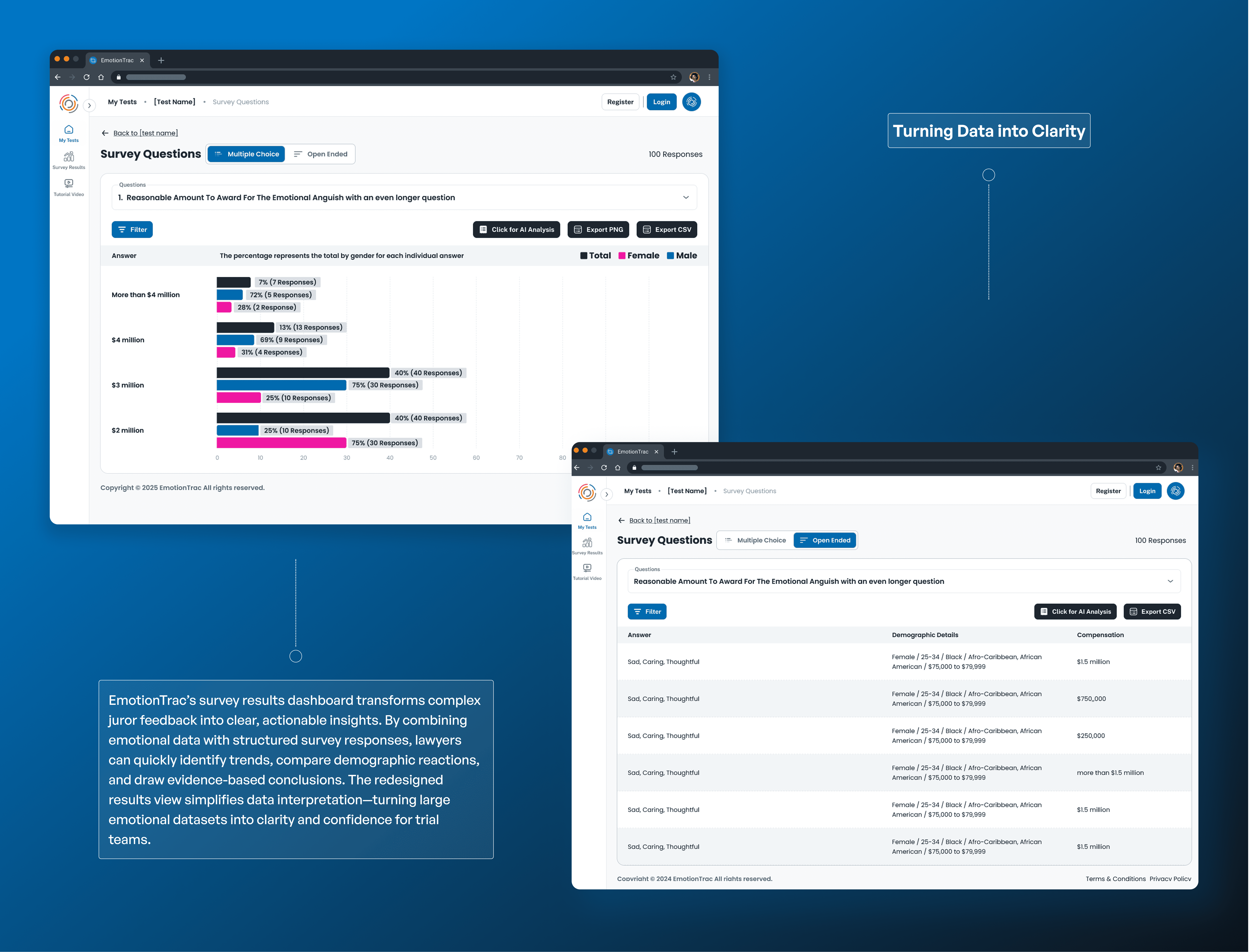
Beyond dashboards and video overlays, I also focused on improving Survey and Graph Results to bridge the gap between quantitative and qualitative insights. Instead of presenting dense spreadsheets of scores, the redesigned system highlights comparative trends across participants, while surfacing contextual survey responses that explain the “why” behind the numbers. This integration gave users a complete view: not only could they see how audiences reacted emotionally, they could also tie those reactions back to self-reported feedback. The result was a platform that empowers decision-makers across industries to test content, refine messaging, and ultimately make choices with greater confidence.
The Outcome
Through these iterations, EmotionTrac evolved from a promising prototype into a versatile decision-making platform trusted by professionals in high-stakes industries. By combining advanced AI with thoughtful design, the product now helps users uncover insights in minutes rather than days, reduces reliance on costly in-person testing, and creates space for more creative experimentation. Whether guiding jury selection or refining a brand campaign, EmotionTrac demonstrates the power of turning raw emotional signals into clear, actionable stories.
Key Insight one
Key Insight two
Key Insight three
Key Insight four
NEXT PROJECT
Go to Next Project
Take me back home
 Get in touch